Showing posts with label hungarian. Show all posts

Monday, 7 June 2010

GYPSY DREAMS (2009)

3rd Hungarian Film Showcase in London

"Somewhere in the World"

22-28 June 2010


Gypsy Dreams (2009)

Director and Producer: Eszter Nordin


Eszter Nordin is a Hungarian director-producer.
She holds a Fine Arts degree, graduated at Pitzer College, California.
Her professional career has begun at BBC Television.
She worked in studio management, drama and documentaries departments.
As a freelance she directed drama and documentaries series in England.

In 1991, when she returned tu Hungary, she continued making documentaries, wrote screenplays, was directing in a theatre, was a supervising director of a succesful tv series, was teaching at the Hungarian Film Academy.

With her Media Mania Films production company she gained international recognition with her film TABU, which received several awards, among others the Special Mention at FIPA in 2003 in creative documentaries.

In her film "Gypsy Dreams" we get know a hungarian gypsy family whose life affected by unemployment and racial discrimination, and they have to come to a conclusion that they no longer have a future there.


Then they migrate to England. They arrive in Bolton where there's already a Hungarian Gypsy population.
They called the Lazi Family.
The documentary follows their struggle, from the promising start to the tough times when in 2009, the recession began in England and the factories closed their doors to foreign workers.
But the Lazis still have hope, and expecting their fourth child....


HUNKY BLUES: THE AMERICAN DREAM (2009)

3rd Hungarian Film Showcase in London

"Somewhere in the World"

22-28 June 2010


Hunky Blues: The American Dream (2009)


Director: Peter Forgacs

Peter Forgacs is a Hungarian media artist and independent film maker. Since 1978 he made more than 30 films, but he is best known for his "Private Hungary" series of award winning films often based on ordinary lives from 1920s and 80s.


Throughout his career he received several international awards. Among others: 2007 Dutch Erasmus Prize for his notable contributions to European Culture 2000 Grand Prize for The Maelstrom, "Out of the Darkness" International Film Festival, London 2000 The Golden Spire, Golden Gate award, for Angelos' Film, San Francisco International Film Festival 1997 Berlin, Prix Europa for Free Fall film His international debute came with The Bartos Family (1988).

Since 1990s his video installations have been presented at museums and art galleries throughout Europe and America. Between 2000-2002 he was artist in residence in The Getty Museum/Getty Research Institue, Los Angeles where he created The Danube Exodus: Rippling Currents of The River Installation.

His works can be found in several museums and public collections. In 2009 he represented Hungary in the Venice Biennale, exhibiting the Col Tempo- The W. Project installation.

/Source: www.forgacspeter.hu, www.hunkyblues.com/

He created Hunky Blues in 2009.

Producer: Gabor Kovacs
Editor: Peter Sass

Musicians:
Karoly Cserepes - keyboard, percussion;
Bela Agoston - saxophone;
Kalman Balog - cimbalom;
Kalman Bango - glass-cimbalom;
Zoltan Farkas - guitar;
Adam Javorka - viola;
Dodi Karpati - trumpet


"The film is a documentary, exploring the fate of thousands of Hungarians who arrived to the United States between 1890 and 1921,reveals the difficult moments of arrival, integration and assimilation, which eventually fed the happiness of the later generations and their fulfillment of the American Dream."

Forgacs tells the story with found footages, photographs and interviews.


MATTIE, THE GOOSE-BOY (1977)

3rd Hungarian Film Showcase in London

"Somewhere in the World"

22-28 June 2010


Mattie, the Goose-boy / Ludas Matyi (1977)


Director: Attila Dargay


Attila Dargay was one of Hungary's very well known and well loved animators.
He was born in Mezonyek, Hungary, 1927.

After getting his degree in Fine Arts, he had a job as a decorator, was a trainee in animation, worked as a cartoonist and designer, and he became a director in 1957.

Through his loveable characters he was able to connect to all age groups.

Whilst Dargay's talent and professional knowledge was reforming Hungarian Animation, his brilliant humour made him one of the most popular creators of the Hungarian Film Industry.


Some of his famous works besdie Mattie, the Goose-boy are Vuk (1981), Szaffi (1985), The tales of Pom-pom (1980).

His last direction was an 11 minutes long cartoon in 1994, and he took part in writing the script of The Seventh Brother in 1996. Then he left and announced his retiring.

He didn't want to adapt the new world of 3D. Although he found it interesting, but still remained the believer of the traditional way.

/Source and reference: www.fszek.hu, Metropolitan Ervin Szabo Library, online catalogue and database/


Mattie, the Goose-boy...

...is a Hungarian epic poem, written by Mihaly Fazekas (1766-1828) in 1804. The poem was an ironic response to the way the lords of Hungary treated the peasants.
Mattie, the Goose-boy counts as a first folk hero in Hungarian literature who overcome his lord's injustice by his intelligence. The tale is a mirror of the Hungarian society.


Mattie, a young boy, trying to sell his geese at the market. All the trouble starts when Lord Daniel Dobroghy claims that the geese belong to him. To punish Mattie he orders 50 lashes to his back. But Mattie makes a vow to get vengeance, that he will repay the punishment three times to the lord.


AMERICAN TORSO (1975)

3rd Hungarian Film Showcase in London

"Somewhere in the World"

22-28 June 2010


American Torso / Amerikai anzix (1975)


Director: Gabor Body


Gabor Body is one of the most outstanding personalities from the Hungarian cinema.

He became a great source of inspiration among filmmakers and film-lovers.

By some he's called radical, and by others the most daring innovator of our time.

Body's film were made in that time when the communism dominated in Hungary and every creative art was under strict control. The regulations said that the cinema should be there for the masses to strengthen the political influence. Experimental films had no chance, film artists were under close surveillance. For that reason for the Body-type-of-filmmakers was difficult to put their ideas onto the big screen.

"He joined the "Studio Bela Balazs" in 1971 (established in 1959, named after the Hungarian scriptwriter) where behind doors experimental films were made despite of the communism outside. It was the meeting place of liberal thinking directors and writers. In 1973 Body set up the "experimental film group K3" as a platform for true experiments."

"From 1971 to 1975 he studied at the Hungarian Film Academy. His diploma work was "American Postcard" (aka American Torso) which after its completion in 1975 won the main award at the Mannheim Film festival in 1976."


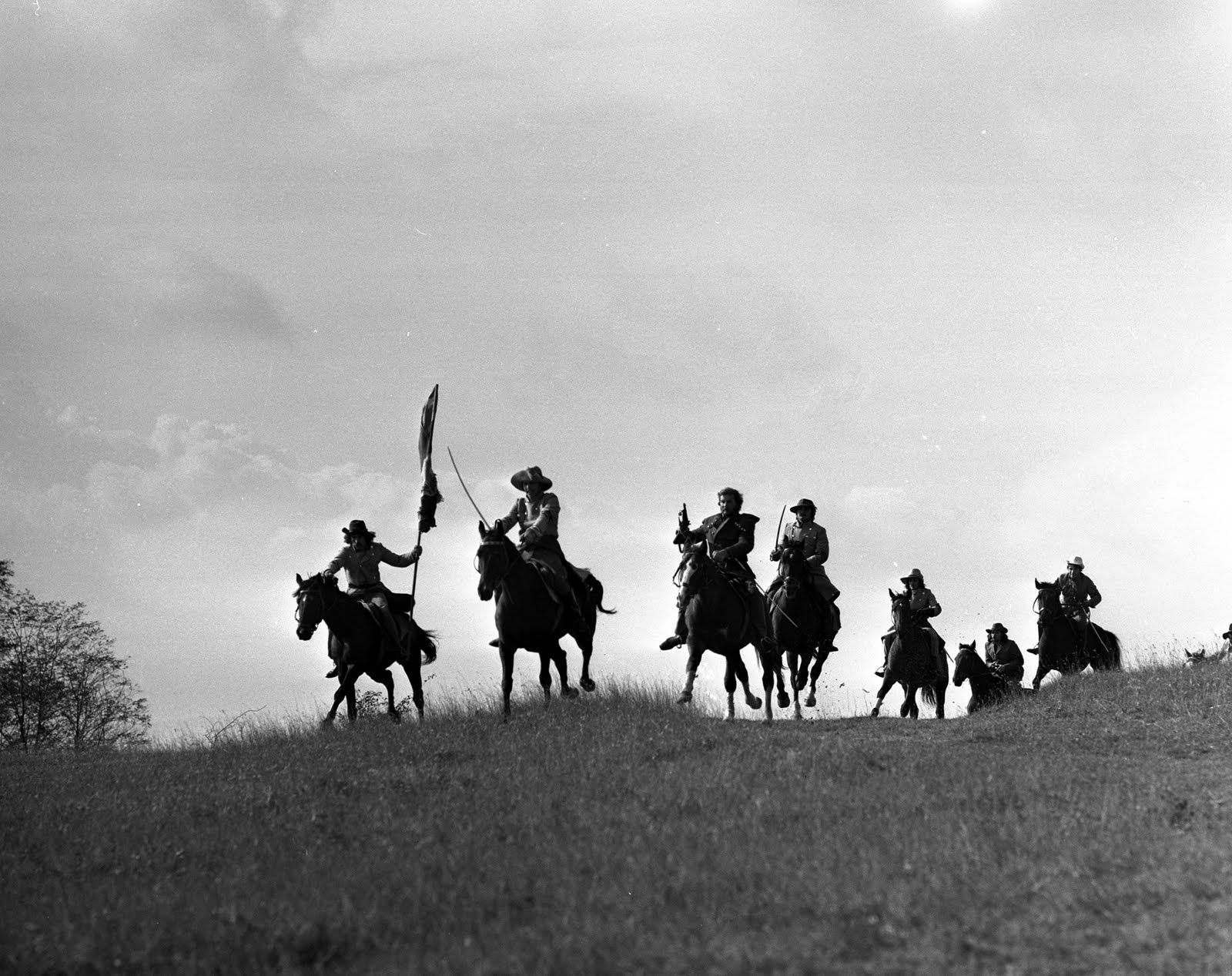
American Torso takes us back in 1865. It's about two hungarians meet in the Civil War. The two men represent two different stories. One story is based on Ambrose Bierce's novel "George Thruston", the other is on the Hungarian War of Independence in 1948.
Body's talent create a beautiful of picture of a true friendship of two completely different persons in the middle of changes.


With his films that present fresh and useful discoveries of its time Body's achieved great development in the Hungarian film industry.

/Source and information: www.bodygabor.hu/

Thursday, 3 June 2010

DANIEL TAKES A TRAIN (1983)

3rd Hungarian Film Showcase in London

"Somewhere in the World"

22-28 June 2010


Daniel takes the train (1983)

Director: Pal Sandor

Pal Sandor, CEO of Hunnia Film Studio, is a very well known director not only in Hungary, but worldwide as well.

A 24-times award-winning director and producer also holds a the Balazs Bela Prize and an Outstanding Artist title (both are the most prestigious Hungarian film awards).
Hunnia Film Studio is the largest film production company, has produced many films since its foundation, 1956.

He holds many film awards. To name a few:

Balazs Bela Prize (Hungarian)
Outstanding Artist Title (Hungarian)
Silver Bear, Berlin (International)
International Critics' Prize, Cannes
Silver Hugo, Chicago (International)
Critics' Prize, Karlovy Vary (International)

Throughout his career he's fulfilled many different roles, such as deputy director between 1985-1989, majority owner and CEO of Novofilm, a Hungarian-German film production company, was a teacher at the Hungarian Academy of Drama and Film.

In 2000 he founded his own film production company, the FilmStreet.


Daniel Takes a Train (or Szerencses Daniel in Hungarian) won several prizes as well after its first appearance on screen in 1982:

1983 - Hungarian Feature Film Festival, First Prize of the Public Jury
Cannes - FIPRESCI Award
1984 - Hungarian Film Critics' Prize for the Best Actor, Gyula Bodrogi
1985 - Zimbabwe: Award for the Festival's Most Inventive Film
1986 - Gdansk: Award for the Best Foreign Film

/
Source: http://www.miracle.dk/files/opum-press-kit.pdf/

Daniel Takes a Train was definitely one of those first films that was brave enough to break the silence on 1956 Soviet Invasion in Hungary.

The film takes us through the nation's political, economical change and Daniel's emotional developement.

Like every young man he's in love too with a girl, Mariann. Their emotions towards each other makes them stick to the moment while the world changes around them.


Mariann's disappearance forces Daniel on a long journey to find her love in the land of promise.


Although he's not the only one hoping to get on the train. There are many who crave for a better future and in the fear of Soviet revenge they are ready to leave one country behind to start a life in another one...


Wednesday, 2 June 2010

SOMEWHERE IN EUROPE (1947)

3rd Hungarian Film Showcase in London

"Somewhere in the World"

22-28 June 2010


Somewhere in Europe (1947)


Director: Geza von Radvanyi
Writer: Bela Balazs

Geza von Radvanyi's name is well known among the best historical movie makers worldwide. He was a Hungarian film director, producer and writer.
Before starting his career in the film industry he made himself known as a journalist, and was a producer assistant and screenwriter in different but mainly French and German film factories.


In 1937 he's married to Maria Fekete Tasnadi who played several roles in his future films.

As a film-maker his aim was to create a successful cinema in Hungary in the 50s and 60s, what would compete Hollywood studios.

One of his most famous works is the Somewhere in Europe, which he made in 1947 (Hungarian title: Valahol Europaban).


The film is described as his best by many historians. Set in the 40s, it's about children (played by orphans), who in order to survive have to form a gang and rob for food. They found a ruined castle where they intend to live, not knowing that it belongs to an elderly musician, who they want to rob him too, but there's a twist, and the building becomes their hiding-place.


With great black-and-white cinematography the film is recommended for everyone who loves children, history, in short, for everyone who loves movies.


CAT CITY (1986)

3rd Hungarian Film Showcase in London

"Somewhere in the World"

22-28 June 2010


Cat City / Macskafogo (1986)


Director: Bela Ternovszky


Monday, 24 May 2010

PUSKAS HUNGARY (2009)

3rd Hungarian Film Showcase in London

"Somewhere in the World"

22-28 June 2010


Puskas Hungary (2009)


Director: Tamas Almasi


About the Director...

PROFESSIONAL EXPERIENCE:

2007 - Founding member of the DLA commitee
2006 - Associate Professor, University of Film and Drama, Budapest
2006 - Doctor of Liberal Arts
1999 - University lecturer,
University of Film and Drama, Budapest
1993 - Film director, Filmdimenzio Kft
2000 - 2003 D.L.A. student,
University of Film and Drama, Budapest (subject of doctoral dissertation: the documentary film)
1979 - 1992 Film director, MAFILM - Hungarian Film Laboratory
1978 - 1979 Associate dierctor, partner of Geza Radvanyi film director
1975 - 1979 Student, Film- and Television Director major, Academy of Film and Drama, Budapest
1970 - 1975 Assistant director, MAFILM - Hungarian Film Laboratory (colleague of Istvan Szabo, Zoltan Fabri, Miklos Jancso)

AWARDS:
2005 - Merited Artist of the Hungarian Republic
2003 - Honorary Freeman of the city of Szekesfehervar
2002 - Order of Merit of the Hungarian Republic Knight's Cross
1999 - Pulitzer Prize in Hungary
1998 - Award for Hungarian Culture
1998 - Bezeredi Award
1995 - Balazs Bela Award

MOST IMPORTANT FILM FESTIVALS, AWARDS:
Best Documentary Film, Hungarian Film Week - 5 times
Hungarian entry for the 75th Annual Academy Awards
Best First Film, Special Award,
Hungarian Film Week
Main Prize, Category Prize, Camera Hungaria
Hungarian Film Critiques Award - 3 times
Main Prize, Best Documentary Prize, Televison Festival at Miskolc
75th Annual Academy Awards, qualification for the competition
Silver Sestertius Award, Nyon Documentary Festival
Golden Gate Awards, Certificate of Merit, San Francisco
Silver Plaque, International Television Competition, Chicago
Special Mention of Prix International de la SCAM, Cinema de Reel, Paris
Special Mention for Documentary, Karlovy Vary
Prix Europa, Berlin
Prix Italia, Bologna
Prix Italia Television Documentary Awards Special Commendation, Naples
FIPA, Biarritz
Gold Special Prize of the Jury, Houston World Fest.
Silver Remy Prize, Houston World Fest.

About the Film...

Cast:
Ferenc Puskas, Elisabeth Puskas, Eva Puskas, Pele, Franz Beckenbauer, Raymond Kopa, Gyula Grosics, Jeno Buzanszky, Sir Alex Ferguson, Alfredo di Stefano, Michel Platini


Plot:

Puskas Hungary looks back on the life of the greatest Hungarian sportsman who ever lived. Ferenc Puskas was, however, more than just a mere sportsman. He was the god of Hungarian football, which in the 1950s was admired all over the world. Puskas was loved everywhere he played and lived: in Madrid, in Athens, even in Melbourne people would chant his name in stadiums and ask for his autograph. He was, and still is, THE national ambassador of hungary. Everybody has heard his name. Puskas is the first thing that occurs to a foreigner's mind when they hear the country's name. Puskas is Hungary. The documentary takes us through all the main episodes of Puskas' life, including the hardhips of losing the 1954 World Cup final, and having to emigrate abroad under the communist regime. The film is simple, yet moving. It is about a man who not only received, but gave love to everyone he knew. He never let fame and stardom go to his head. He was a true legend.

(Source of the above material and more information: http//almasitamas.hu/)


Tuesday, 18 May 2010

CLOSE TO LOVE (1999)

3rd Hungarian Film Showcase in London

"Somewhere in the World"

22-28 June 2010


Close to Love (1999)

Director: Andras Salamon

"Salamon's extensive experience with the medium of the documentary clearly assists him in his handling of Close to Love. Well versed in his principle themes by now, Salamon creates his characters with confidence and depth; he allows them to be the basis of the film rather some preordained number of car-chases, shoot-outs and love scenes that directors these days seem to think are absolutely necessary to their film. Ironically, Close to Love does contain a car-chase, a shoot-out and a love-scene but they are their because the characters, and not the director, demand them.

Close to Love is a modest film which has simple aims - to tell a story.
Since it was one of the few films that seemed prepared to do this, it is perhaps no surprise that the film was rewarded with a distinction for the best screenplay."

/Source:
by Andrew J Horton, 6 April 1999, Central Europe Review, Kinoeye, http://www.ce-review.org/kinoeye/kinoeye28old1.html/

Cast:
Ferenc Hujber, Tsuyu Shimizu, Nimrod Antal, János Gyuriska, Károly Gesztesi, Ervin Nagy, Erzsi Pásztor, András Ambrus, András Fekete, Sarolta Thuroczy


Ferenc Hujber and Tsuyu Shimizu in "Close to Love"


Plot: Karcsi seems to have it all: he fulfilled his dreams in the big city, he is a policeman as he always wanted to be, has a dog and found true love. Yet the fact that his girlfriend is a Chinese immigrant in Budapest means that there is still a lot their love has to conquer.